What Changed in 2008—And Why It Matters to Your Yields
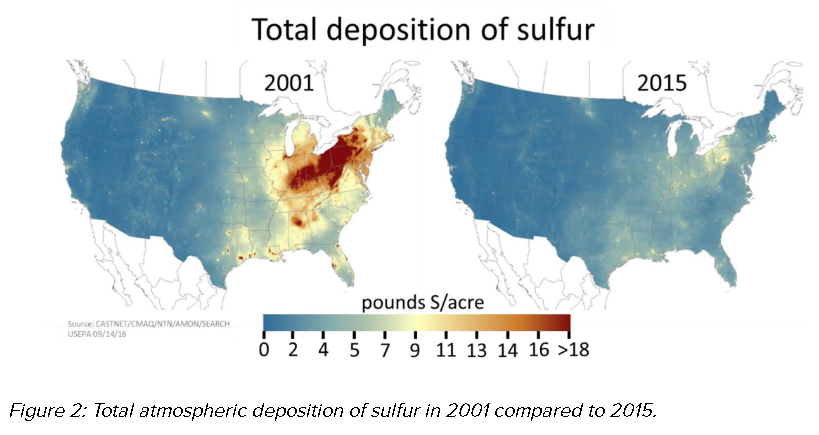
Over the past decade, the demand for micronutrients has grown dramatically—and not by coincidence. In 2008, federal clean-air regulations required coal-fired power plants and other industrial sources to remove sulfur and other particulates from their emissions. Before these regulations, atmospheric deposition provided a consistent “free” supply of several essential elements—most notably sulfur, but also boron, zinc, and manganese—through rainfall and dust settling on farmland.
According to long-term soil test data from A&L Laboratories, this change has had a measurable agronomic impact. In 2001, many areas of the Midwest received approximately 12 pounds of sulfur per acre per year from atmospheric deposition. Today, that number has fallen to less than half a pound.
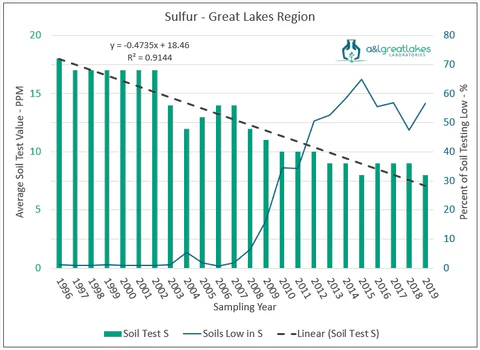
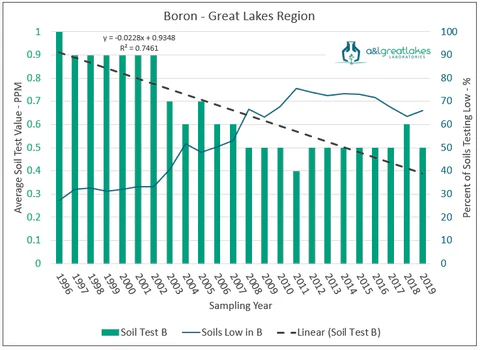
Sulfur deficiencies in soil samples began rising sharply after 2008, coinciding with the implementation of emission-reduction mandates. Boron has shown a similar trend. By 2019, over 95% of soils tested below 0.08 ppm boron—a level that research has consistently associated with lost yield potential in both corn and soybeans. These findings confirm that elements once supplied naturally must now be intentionally supplemented through nutrient programs to maintain crop balance, efficiency, and yield.